
Armenian
Recorded in Constantinople, Cairo, Tiflis and the diaspora, 1900s–1930s
The oud and the taksim, carried out of Anatolia into the recording capitals. Armenian musicians were central to the Ottoman record industry, and then to the immigrant scenes in the United States — very often the same players, cutting the same tunes under different language labels for different communities.
About this hearth
Armenian musicians recorded in Ottoman and later Turkish cities, in the Russian Empire’s Caucasus centres, in Egypt and in émigré hubs in Europe and the United States. Modal melody, richly ornamented vocal lines and instruments such as the oud, kamancha, tar, kanun and clarinet appear across sacred and secular sides. Church music and paraliturgical song sit beside love lyrics, dance tunes and theatrical numbers. The records are a primary witness to a culture whose performance geography was already transnational before 1946.
Recorded in: Constantinople, Cairo, Tiflis, New York
Yerevan, in their time
Erivan in the last years before the Soviet city — the markets, Bebutovskaya street, and the women photographed on the Baye mission in 1898. Wikimedia Commons and the French national library.
Press any photograph to open it full size — the player keeps going behind it.
The music-makers and the dress
9 period photographs of this hearth's own music-makers and dress, every one dated from its source's own records. Pictures are shown as documentary record, credited to the holding collection; anything here is removed on request. Sources: Wikimedia Commons (9).
Press any photograph to open it full size — the player keeps going behind it.
Figures on record
Every card is a genuine photograph of the artist, credited to its source. Performers of this era often left no portrait behind — where none survives, we show nothing rather than a stand-in image. Pick a figure to pull their recordings up.
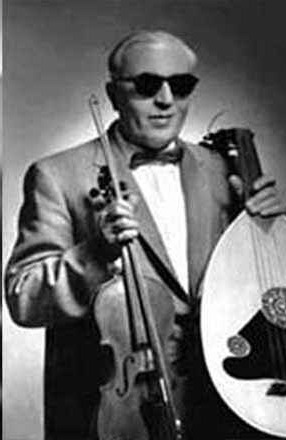
The Armenian oud master of Istanbul, blind from infancy and the model for every Armenian oud player after him. His own discs are Ottoman-Turkish repertoire and sit on the Turkish hearth; this card waits here for the Armenian sides.
With violin and oud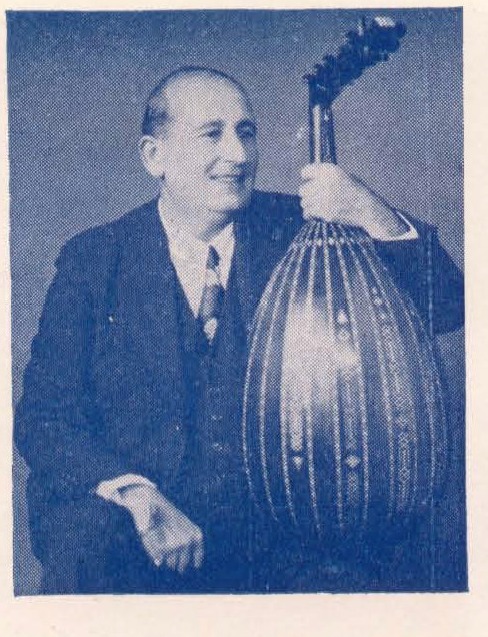
Smyrna-born, New York-based oud player and singer of kef music — the Ottoman nightclub repertoire the Armenian diaspora carried with it. His own discs are Turkish-repertoire sides on the Turkish hearth; this card waits here for the Armenian sides.
With his oud, from his LP sleeveRestored Recordings
Every track below is a remaster. Press play on the full sequence, or pick a single recording.
A Group of Armenian Songs by Hagop H. Asadourian
ARMENIAN DANCE
Armenian Folk Ensemble - Dance of Erivan and Kazbek
ARMIANSKY TANETZ (ARMENIAN DANCE)
SHALAHO (Armenian Dance)
About the restoration
Every recording here is a historical track sourced from a public archive and remastered through a purpose-built chain — the same fixed chain for every file, no machine-learning enhancement. The aim is simple: sound better, and meet YouTube's audio standards. Rights status differs per recording and sources are credited where known; anything still in copyright is published with attribution and removed on request. The surface noise of the original transfer is still audible, because removing it completely would mean removing the recording too. How the restoration works →
Hear next door
These traditions sat beside each other on the shelf — recorded in the same cities, pressed by the same companies, and often sold to the same listeners. Follow the thread.