
Time Travelers United logo Time Travelers United
Restoration Project

Studios & recording places

Every side here was cut in a room, in a city, by a company that no longer exists. This page holds what we can establish about those rooms: who ran them, what they recorded, and where the musicians who walked into them had come from.

The studios

The houses that cut this archive. Several are still household names; others lasted only a few years and survive only on the labels of the discs they pressed.

No photograph yet

Victor Talking Machine Company

Camden, New Jersey · United States · 1901-1929

The largest American record company of the era, and the one that cut most of the Irish, Italian, Greek, Jewish and Slavic immigrant series in this archive. Its New York recording rooms took the emigrant musicians; the Camden works pressed the discs. Victor moved from acoustic horns to electrical recording in 1925, and the difference in the surviving sides is audible.

In this archive: irishitalianrussianukrainianyiddishpolishgreekhungarianarmenianfinnishlatvianlithuanianslovaknorwegian
No photograph yet

Columbia Phonograph Company

New York · United States · 1888-1930s

Victor's great rival, and the other half of the American ethnic catalogue. Columbia issued the Irish, Greek, Russian and Jewish series that ran alongside Victor's, often with the same players cutting for both houses under different catalogue numbers.

In this archive: irishrussianukrainianyiddishgreekitalianpolish

Edison

Edison

West Orange, New Jersey · United States · 1888-1929

The cylinder maker, and the company that started the record industry. Edison held to the cylinder far longer than anyone else, and to acoustic recording longer too, so its surviving sides carry the older, closer sound. Its Welsh series of 1910 is among the earliest commercial recordings of Welsh voices.

In this archive: welshirishitalian

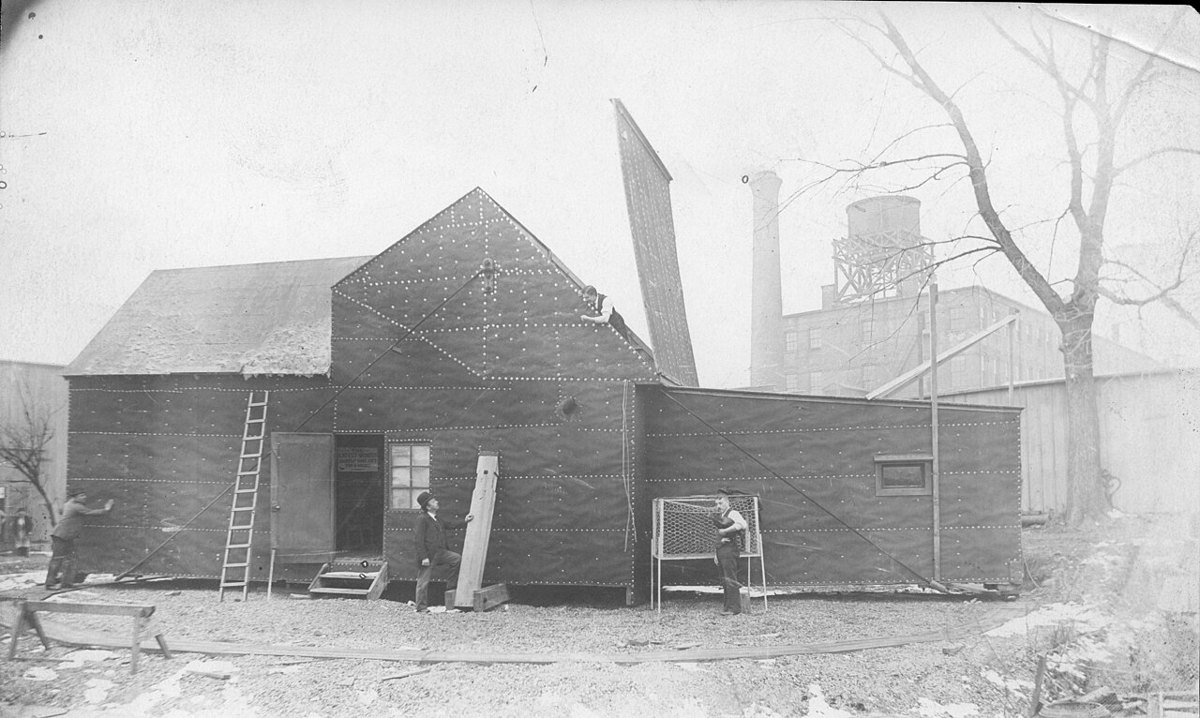
Edison's 'Black Maria' studio at the West Orange, New Jersey compound, where the recording operation was based. Photograph, public domain (Wikimedia Commons).

No photograph yet

The Gramophone Company (His Master's Voice)

Hayes, Middlesex · United Kingdom · 1898-1931

The British giant, with recording operations across Europe, the Middle East and India. Its Hayes factory pressed the discs, and its travelling engineers cut in Cairo, Constantinople, Smyrna and Bucharest - which is how so much Middle Eastern and Mediterranean material ended up in the catalogue.

In this archive: egyptiansyriaturkishlebaneseiraqiarmeniangreekwelsh

No photograph yet

Odeon

Berlin, with operations in Cairo · Germany / Egypt · 1903-1930s

The International Talking Machine Company's label, and the one that recorded in Cairo and Alexandria during the years the Egyptian material here was cut. Odeon's Egyptian series is the spine of that hearth.

In this archive: egyptiansyrialebaneseiraqiturkish

No photograph yet

Pathe

Paris · France · 1894-1930s

The French house, and the one that cut the French and North African material here. Pathe used its own vertical-cut system, incompatible with other machines, which is part of why its discs were played less and survive better.

In this archive: frenchflamencoitalian

No photograph yet

Deutsche Grammophon

Berlin and Hannover · Germany · 1898-1940s

The German arm of the Gramophone Company's family, and the label behind much of the German and Central European material. Hannover was pressing while Berlin was recording.

In this archive: germanhungarianslovakromanian

No photograph yet

Ultraphon

Berlin · Germany · 1929-1933

A short-lived German label that cut the Czech and Slovak material in this archive. It existed for only a few years, so its sides are a narrow window on a precise moment.

In this archive: czechslovakgerman

No photograph yet

Homocord

Berlin · Germany · 1920s-1930s

Another Berlin house from the same dense German recording scene, cutting folk and popular material in the years before the industry was reorganised.

In this archive: germanslovak

No photograph yet

Columbia (British series)

London · United Kingdom · 1920s-1930s

The British Columbia operation, which cut and pressed much of the Welsh chapel and choir material here. Choral recording was a speciality: a choir in a chapel, cut in a single take.

In this archive: welshirish

Where they were recorded

Not every side was cut where it was sold. The American immigrant series were recorded in New York, Boston and Chicago; the Middle Eastern material in Cairo, Constantinople and Smyrna. Use the map to see the spread.

The crossing

For the emigrant musicians, the record was the end of a journey. What we can document is listed here; each entry is a fact we can source, not an inference.

The full record of who sailed when — passenger manifests, arrival dates and the streets they settled on — is being compiled. It will appear here as each is verified.