
Norwegian
Recorded in Oslo, Bergen and abroad, 1900s–1930s
The shelf holds published sides from a vault tagged Norwegian. The years that appear on the discs are 1917, 1922, 1925 and 1926. Rights classification is sparse: only a few sides are firmly pre-1923, some fall in the 1923–46 gray band, and the majority remain unknown.
Two sides carry Grieg: a Norwegian Bridal Procession and a Norwegian Dance, the latter with the violinist Carl Flesch. The London Symphony Orchestra takes four sides of the Norwegian Dances, Op. 35; the BBC Wireless Symphony Orchestra plays the Norwegian Rustic March from the Lyric Suite; Maurice Cole records the Norwegian Bridal Procession; and Carl Flesch, with Kurt Ruhrseitz, gives a Norwegian Dance. Mabel Garrison’s 1917 Norwegian Echo Song (“Kom Kjyra!”) stands among the earliest dated pieces.
Norwegian-language titles fill out the rest. Det kongelige Kapel appears in Svendsen’s Norsk Kunstnerkarneval, Erling Krogh’s Kvartett in a Norsk Potpourri, Guldbergs akademiske kor in Brudefærden på Hardanger, Zetterström & Kristoffersen in Den norske Fiskermann, and Holck og Peters’ Harmonikaorkester in a sailor’s song. Herr Johan Elsmo supplies a Norsk Bondevals and an Old Norwegian Rheinländer. Across these sides the title words lean toward orchestra, dance, march and song.
Oslo, in their time
Christiania before it was Oslo — the great market around the statue of Christian IV, the trams, and Piperviken when it was still a working harbour.
Press any photograph to open it full size — the player keeps going behind it.
Figures on record
Every card is a genuine photograph of the artist, credited to its source. Performers of this era often left no portrait behind — where none survives, we show nothing rather than a stand-in image. Pick a figure to pull their recordings up.
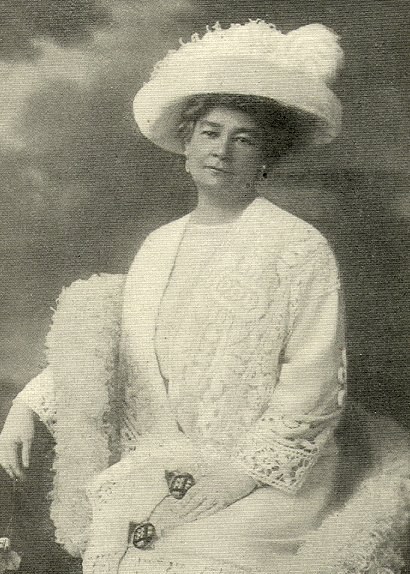
Ernestine Schumann-Heink (1861–1936) was a celebrated Austrian-American dramatic contralto of Bohemian birth, renowned as one of the foremost interpreters of Wagner roles (especially Erda) at the Bayreuth Festival from 1896 to 1914 and for creating Klytemnestra in Strauss’s Elektra. She sang regularly at the Metropolitan Opera from 1899 and made numerous commercial recordings for Victor and Columbia beginning in the early 1900s. In later life she became an American citizen, entertained troops during World War I, and was beloved for annual radio performances of “Silent Night.”
Wikipedia (en) — check file page for licence 📰 The patriot (Indiana, Pa.), 1916-06-03 +2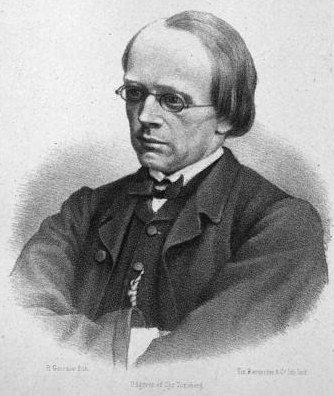
Halfdan Kjerulf (1815–1868) was a pioneering Norwegian composer known for his lyrical songs, men's chorus works, and piano pieces that blended German Romantic influences with Norwegian national elements. He began as a journalist and self-taught musician before studying in Copenhagen and Leipzig; his output, including popular songs such as "Synnöves sang" and "Last Night," was widely recorded on 78rpm discs from the 1890s through the 1950s. Edvard Grieg admired and was influenced by Kjerulf's intimate, folk-inspired style.
Wikimedia Commons — check file page for licence 📰 New-York tribune (New York [N.Y.]), 1910-09-25 +2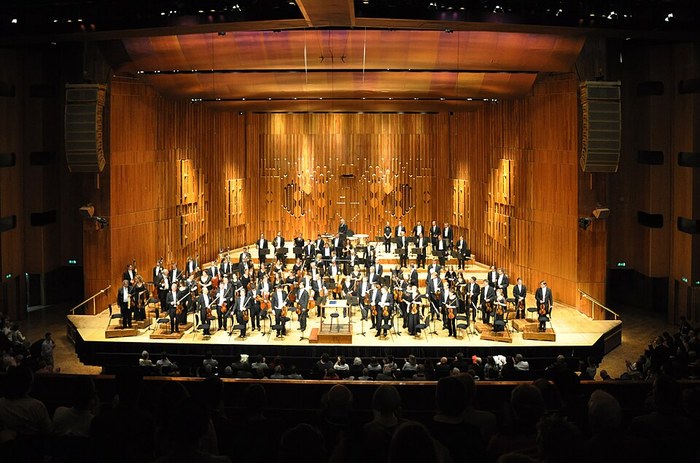
The London Symphony Orchestra (LSO), founded in 1904 as a self-governing ensemble by players from Henry Wood's Queen's Hall Orchestra, is the oldest of London's major symphony orchestras (Wikidata Q155805). It quickly became one of the most recorded orchestras of the acoustic and early electric era, working with conductors such as Hans Richter, Edward Elgar, and Albert Coates on 78rpm discs for labels including HMV and Columbia. During the period 1925–1953 it made numerous commercial recordings while also maintaining a strong reputation for live performances, including notable appearances associated with Norwegian cultural events in London.
Wikimedia Commons — check file page for licence 📰 Le messager (Lewiston, Me.), 1942-03-20 +2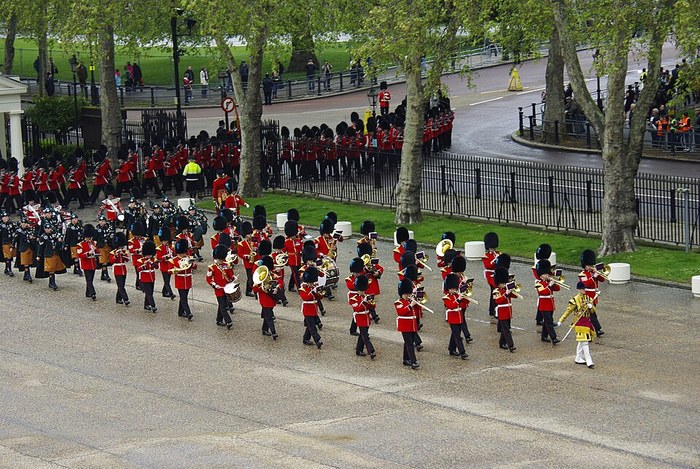
The Band of the Irish Guards (also credited as Band of H.M. Irish Guards) is the official military band of the Irish Guards regiment of the British Army's Household Division. Formed in 1900 shortly after the regiment itself, it was led in its early years by Bandmaster Charles Hassell and quickly established a reputation for excellence through tours (including Canada in 1905) and public performances. It made what is believed to be the first broadcast by a military band in 1923 and was a prolific recording ensemble in the acoustic and early electric 78rpm era, producing numerous marches and selections for British labels.
Wikimedia Commons — check file page for licence 📰 Trainman news (Indianapolis, Ind.), 1951-07-16 +2The music-makers and the dress
9 period photographs of this hearth's own music-makers and dress, every one dated from its source's own records. Pictures are shown as documentary record, credited to the holding collection; anything here is removed on request. Sources: Wikimedia Commons (9).
Press any photograph to open it full size — the player keeps going behind it.
Restored Recordings
Every track below is a remaster. Press play on the full sequence, or pick a single recording.
🇳🇴 Aalrud Tillisch - Eg Gjætte Tulla · Remastered
🇳🇴 August Werner - Barndomshjemmet · Remastered
🇳🇴 August Werner - Sang Til Bergen (1919) · Remastered
🇳🇴 Bjørnstjerne Bjørnson - Ingerid Sletten · Remastered
🇳🇴 Carl Struve - Liden Karen · Remastered
🇳🇴 Carl Struve - Sylvelin (1920) · Remastered
🇳🇴 Carsten Woll - Gamble Norge (1919) · Remastered
🇳🇴 Carsten Woll - Syng Mig Hjæm (1913) · Remastered
🇳🇴 Clarence Iverson - Mellom Bakkar Og Berg · Remastered
🇳🇴 Clarence Iverson - Pål Sine Høner · Remastered
🇳🇴 Edvard Storm - Sinklars Vise · Remastered
🇳🇴 Ernestine Schumann-Heink - Im Kahne · Remastered
🇳🇴 Ernestine Schumann-Heink - The Mother Sings (1913) · Remastered
🇳🇴 Ester Olsen - Fisker Valsen · Remastered
🇳🇴 Ester Olsen - Sæterjenten (1919) · Remastered
🇳🇴 Halfdan Kjerulf - Længsel · Remastered
🇳🇴 Inga Orner - Kom Kjyra! · Remastered
🇳🇴 Louise Homer - Last Night (1911) · Remastered
🇳🇴 Lydia Lindgren - Solveigs Sang (1916) · Remastered
🇳🇴 Lydia Lindgren - Synnöves Sang (1916) · Remastered
🇳🇴 Nathalie Hansen - Blåbær-Li · Remastered
🇳🇴 Nathalie Hansen - En Svane · Remastered
🇳🇴 Nathalie Hansen - I Fjor Gaett Eg Geitinn · Remastered
🇳🇴 Nathalie Hansen - Jule Nat · Remastered
🇳🇴 Rolf Hammer - Kom Med Visor · Remastered
🇳🇴 Rolf Hammer - Siste Reis (1914) · Remastered
Brudefarden pa Hardanger
DEN NORSKE FISKERMANN
Gammel norsk Jægermarsch af Schølberg
Gammel norsk Rheinlænder
LITTLE NORWEGIAN SUITE (No. 3); SPRINGTIDE
LITTLE NORWEGIAN SUITE (NO'S. 1 & 2)
Lyric Suite Op.54 2. Norwegian Rustic March
Lyrische Suite - No. 2 - Norwegian Rustic March (Norwegischer Bauernimarsch)
Norsk bondepolka
Norsk Bondevals
NORSK FJELDMARSCH
Norsk Kunstnerkarneval, Opus 14
Norsk Potpourri
NORSK SJOMANDSVISE
Norsk Sjömandsvise
Norske Toner
NORWEGIAN BRIDAL PROCESSION Op. 19, No. 2
NORWEGIAN CRADLE SONG
NORWEGIAN DANCE
Norwegian Dance No. 1 Op. 35
NORWEGIAN DANCE NO. 2
Norwegian Dance No. 2 Op. 35
Norwegian Dance No. 3 Op. 35
Norwegian Dance No. 4 Op. 35
Norwegian Dance, Op. 35, No. 2
Norwegian Dances Op. 35 No. 1 Allegro Marcata (in D Minor)
Norwegian Dances Op. 35 No. 2 Allegretto Tranquillo (in A Major)
Norwegian Dances Op. 35 No. 3 Allegro moderato aller marcia (in G Major)
Norwegian Dances Op. 35 No. 4 Allegro Molto (in D)
Norwegian Dances Op.35 - No.4 in Dmajor
Norwegian Dances Op.35 No. 2 in Aminor; Norwegian Dances Op.35 No.3 in Gmajor
Norwegian Echo Song ("Kom Kjyra!")
Norwegian Mountain March
Norwegian Polka
Norwegian Schottische, The
Two Folk Tunes (a) Norwegian (b) Irish
Saetergjentens Söndag
Sönner af Norge (Patriotic Air of Norway)
Synnöves Sang
1 side once grouped here is now filed under the tradition it belongs
A side belongs to the tradition of its language and performance, not to the pool that happened to queue it. These were listed on this page before that was settled; each remains on the site, on the hearth it has been filed to.
About the restoration
Every recording here is a historical track sourced from a public archive and remastered through a purpose-built chain — the same fixed chain for every file, no machine-learning enhancement. The aim is simple: sound better, and meet YouTube's audio standards. Rights status differs per recording and sources are credited where known; anything still in copyright is published with attribution and removed on request. The surface noise of the original transfer is still audible, because removing it completely would mean removing the recording too. How the restoration works →