
Mexican
Recorded in Mexico City and the United States, 1900s–1940s
Mexican early recordings include sones and regional song, canción ranchera and related popular forms, revolutionary ballads and salon music. Mariachi, string ensembles and guitar-accompanied voice are central.
, in their time
Photographs from Mexican, made in the years these records were pressed — the streets, faces and stages the sides were sold to.
Press any photograph to open it full size — the player keeps going behind it.
Figures on record
Every card is a genuine photograph of the artist, credited to its source. Performers of this era often left no portrait behind — where none survives, we show nothing rather than a stand-in image. Pick a figure to pull their recordings up.
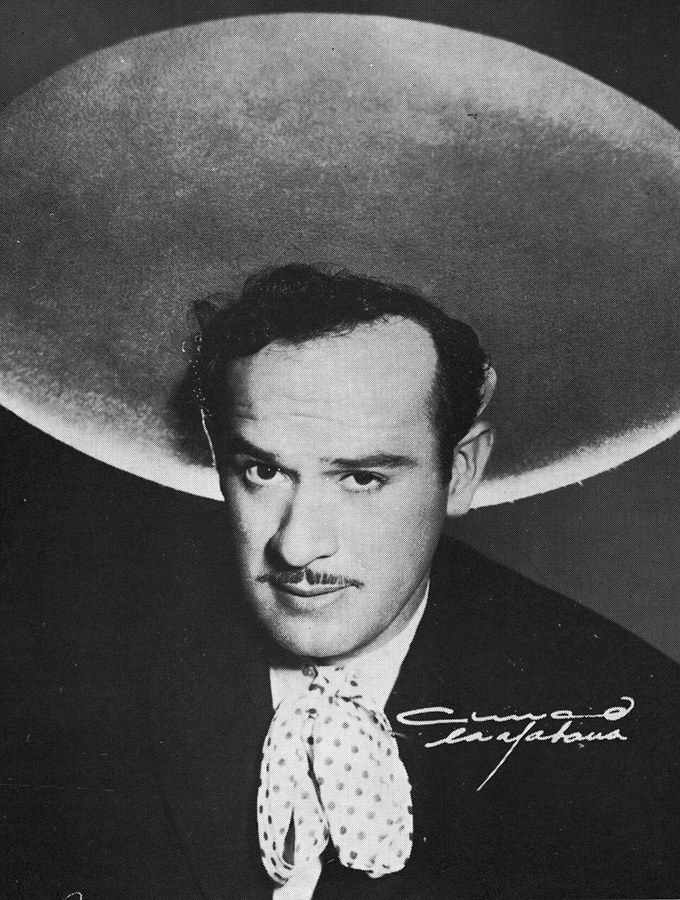
Pedro Infante (1917–1957) was a Mexican singer and actor who became one of the greatest icons of the Golden Age of Mexican cinema and ranchera music. Born in Mazatlán, Sinaloa, and raised in Guamúchil, he began his recording career in late 1943 with Peerless Records, releasing his first major hit "El Soldado Raso" and quickly becoming a star with over 350 songs recorded. He appeared in more than 60 films between 1939 and 1957, earning the Ariel Award for Best Actor and posthumous international recognition, before dying in a plane crash on April 15, 1957.
Wikipedia (en) — check file page for licence 📰 El Tucsonense (Tucson, Ariz.), 1949-12-30 +2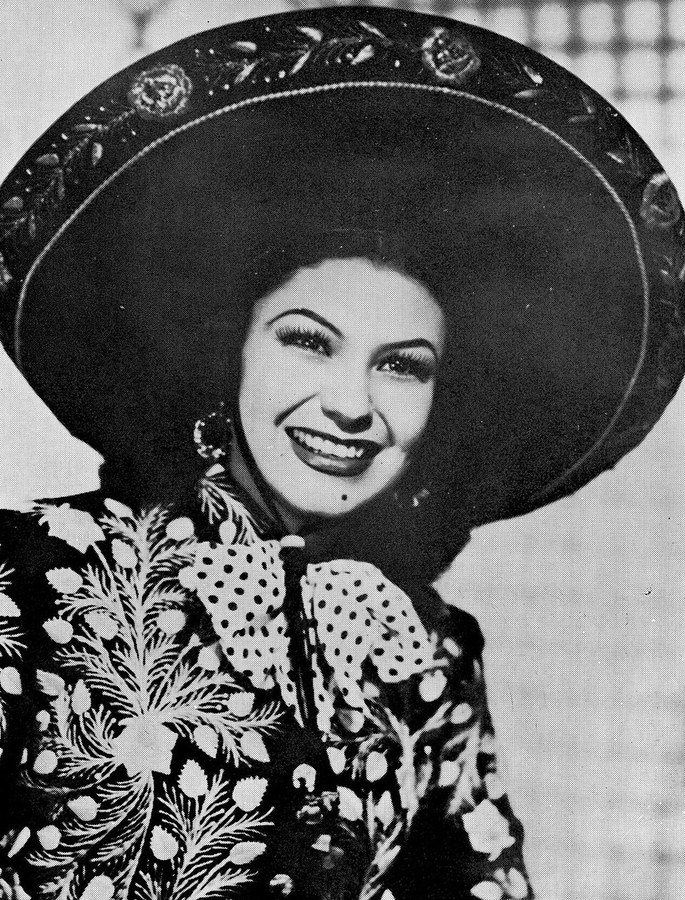
Matilde Sánchez Elías (24 March 1924 – 1 November 1988), known by her stage name La Torcacita, was a Mexican singer specialized in the musical genres of ranchera, huapango and corrido.
Wikipedia (en) — check file page for licence 📰 Nogales international (Nogales,..., 1947-03-21 +2
Amalia Mendoza García (1923–2001), known as La Tariácuri, was a leading Mexican singer of ranchera, mariachi and bolero music. Born into a musical family in Michoacán, she performed in a duo with her sister Perla as Las Tariacuritas before launching a successful solo career in 1954 with hits including "Puñalada trapera" and "Amarga Navidad"; she recorded approximately 36 albums, mostly for RCA Víctor, frequently accompanied by Mariachi Vargas de Tecalitlán. Her lead image on the English Wikipedia article confirms her identity as the performer whose four sides appear in the archive (recording dates unknown).
Wikipedia (en) — check file page for licence 📰 El sol (Phoenix, Ariz.), 1955-12-23 +2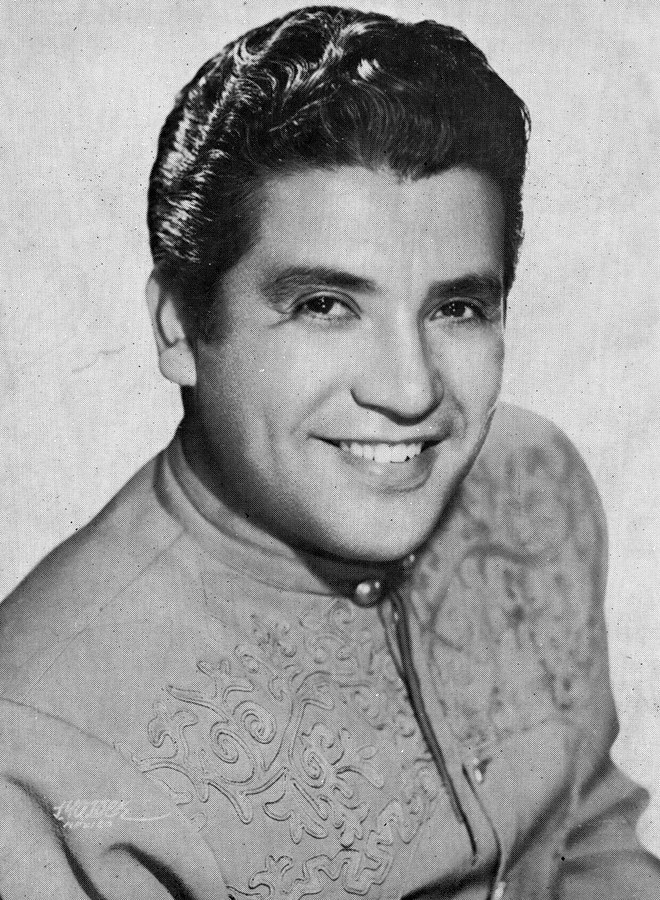
Miguel Aceves Mejía (1915-2006) was a renowned Mexican singer and actor, widely known as "El Rey del Falsete" for his distinctive falsetto voice and interpretations of ranchera, mariachi, bolero, and tango. He began his recording career in 1938 with the trio Los Porteños, initially focusing on boleros before becoming a major figure in ranchera music; he recorded over 1,600 songs and appeared in more than 60 films during Mexico's Golden Age of Cinema.
Wikimedia Commons — check file page for licence 📰 Montana oil and mining journal..., 1932-07-23 +2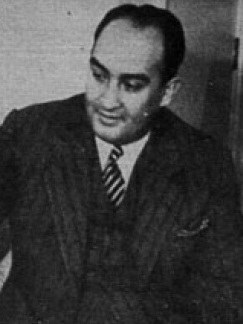
Pedro Vargas Mata (29 April 1906 – 30 October 1989) was a Mexican tenor and actor, from the golden age of Mexican cinema, participating in more than 70 films. He was known as the "Nightingale of the Americas", "Song Samurai" or "Continental Tenor". Despite his training in opera, he dedicated his career to popular song, reaching international recognition and becoming one of the main interpreters of
Wikipedia (en) — check file page for licence 📰 El sol (Phoenix, Ariz.), 1951-10-12 +2The music-makers and the dress
1 period photograph of this hearth's own music-makers and dress, every one dated from its source's own records. Pictures are shown as documentary record, credited to the holding collection; anything here is removed on request. Sources: Wikimedia Commons (1).
Press any photograph to open it full size — the player keeps going behind it.
Restored Recordings
Every track below is a remaster. Press play on the full sequence, or pick a single recording.
Valle De Mexico (Cancion)
🇨🇺 Cuando Sale la Luna · Avelina Landin · Remastered
El Chicle (Polka Acordeón Con Guitarra)
A la Misma Hora
La Barca de Oro (Ship of Gold)
La Rosa de Oro
🇲🇽 Alfonso Esparza Oteo - La India Bonita (1922) · Remastered
🇲🇽 Emilia Sánchez & Matilde Herrera - Los Diamantes de Corona (1912) · Remastered
🇲🇽 Fierro y Zambrano - La Nueva Moda (1922) · Remastered
🇲🇽 Gonzalez's Mexican Band - La Paloma (1923) · Remastered
🇲🇽 Jose Moriche - "Ojos Verdes" (1923) · Remastered
🇲🇽 Laura Magana y Jose Moriche - Agua Le Pido a Mi Dios (1923) · Remastered
🇲🇽 Laura Magana y Jose Moriche - La Chaparrita (1923) · Remastered
🇲🇽 María Luisa Escobar - Pura Mexicana (1924) · Remastered
🇲🇽 Orquesta Tipica Mexicana "Lerdo" - Dónde Estás Corázon? (1923) · Remastered
🇲🇽 Orquesta Tipica Mexicana "Lerdo" - Nunca (1923) · Remastered
🇲🇽 Pedro Infante - Siempre Borracho (1921) · Remastered
A Jorge Negrete - Corrido (To Jorge Negrete)
ALLA EN EL RANCHO GRANDE
Arriba el Norte
Benito Canales (Corrido)
Cielito Lindo
CIELITO LINDO
Como un Naufrago
Corrido de Cananea
Corrido de los Bravucones
CORRIDO DE LUPE VELEZ
Corrido de Veracruz
DE CUANDO EN CUANDO
Dios Si Existe (Corrido)
El Bandolero Maxicano
El Bolero Mexicano - Humanidad (1931-1945)
El Caballo Ensillado
El Colero
El Corrido de Ventura Ramos
EL DURAZNO
EL DURAZNO
EL HIJO DESOBEDIENTE
El Sauz Y La Palma (Corrido)
El Venadito
Evocaciones de la máquina parlante. El Fonógrafo En México
Hace Un Año (Corrido)
Hasta la Pregunta Es Necia
HOJITOS NEGROS Y CHINOS
Jalisco Nunca Pierde (Corrido)
Jorge Negrete (Corrido)
LA FERIA DE LAS FLORES
La Güera Chabela (Corrido De Jesús Cadenas)
La Palomita (Fox Corrido)
La Soldadera
Los Jacalitos
Los Tarzanes
Mexicanitas
Mi Casita de Paja
MI MUJER-Son
Mi Virgen Rachera
Ora Que Tengo un Amor
Otro Amor Que Se Va
Por Amor Al Dinero
Que Contento Estoy (Corrido)
Serenata Tapatia
Sobras
SOLDADO RASO
Traicionera
Vamos a Darle
Zarape Nacional
About the restoration
Every recording here is a historical track sourced from a public archive and remastered through a purpose-built chain — the same fixed chain for every file, no machine-learning enhancement. The aim is simple: sound better, and meet YouTube's audio standards. Rights status differs per recording and sources are credited where known; anything still in copyright is published with attribution and removed on request. The surface noise of the original transfer is still audible, because removing it completely would mean removing the recording too. How the restoration works →