
Egyptian
Recorded in Cairo, 1900s–1930s
Cairo was the first city in the region to get a commercial record industry, and this collection comes from its opening decades. Egyptian recording began in earnest around 1907 — and it was an acoustic trade, cut with a horn and no microphone, so a voice had to be delivered at full power or not at all.
The first stars were reciters rather than stage singers: Sheikhs trained in religious chant, working in the long classical qasida. Then came the cinema generation, which put women at the front of the trade and produced a rivalry — Asmahan against Umm Kulthum — that is still argued about today.
About this hearth
Cairo became the main recording capital of the Arab world in the first decades of the twentieth century, with major labels maintaining active local programmes. Singers and instrumentalists worked in modal frameworks (maqam), accompanied by takht ensembles of oud, qanun, nay, violin and percussion, later enlarged for theatre and cinema. Improvised layout of a performance—layali, taqsim, composed verses—matters as much as any fixed tune. The discs preserve the generation that defined Egyptian concert and stage song before and during the rise of radio and film.
Recorded in: Cairo
Cairo, in their time
Cairo street life in the years the Egyptian sides were cut — sellers, markets and the crowd at the mosque. Library of Congress and Wikimedia Commons.
Press any photograph to open it full size — the player keeps going behind it.
The music-makers and the dress
10 period photographs of this hearth's own music-makers and dress, every one dated from its source's own records. Pictures are shown as documentary record, credited to the holding collection; anything here is removed on request. Sources: Wikimedia Commons (10).
Press any photograph to open it full size — the player keeps going behind it.
Figures on record
Every card is a genuine photograph of the artist, credited to its source. Performers of this era often left no portrait behind — where none survives, we show nothing rather than a stand-in image. Pick a figure to pull their recordings up.
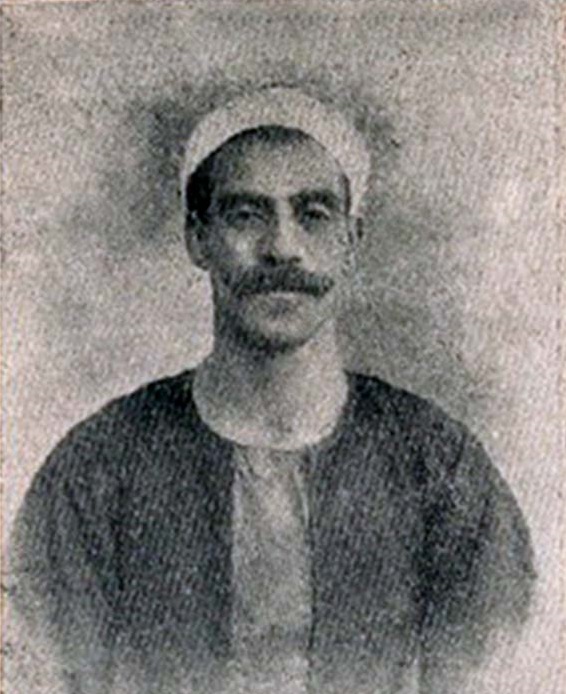
Sheikh Sayed El-Safti began recording as early as 1907 and was still cutting discs in the 1930s, carrying the authority of a man trained in religious recitation into the commercial studio.
Public domain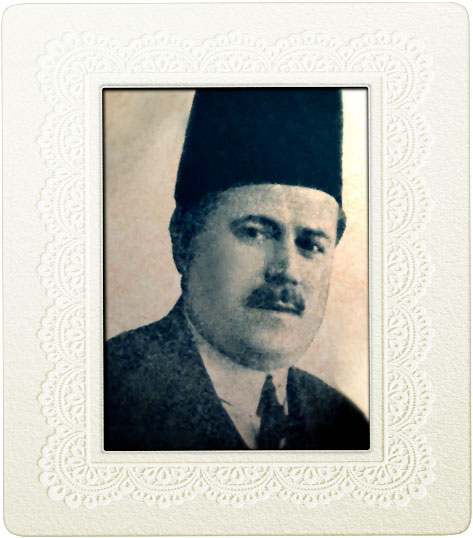
A singer, composer and religious cantor (hazzan) respected across Cairo, and the father of Leila Mourad, who became one of Egyptian cinema's biggest stars.
Photo: Mithaq.g · CC BY-SA 4.0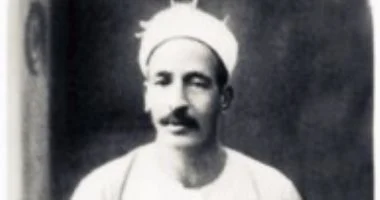
Billed on his own label as 'Cheikh Abou el Ela Mohamed, Caire'. The disc carries the period genre stamp 'ARABIAN MALE SONG' and an Opera Disc Company order number — an American label whose 'Musica' imprint served imported and reissued records for immigrant listeners.
Public domain, 1920s
The most famous Arab singer of the twentieth century, and the standard against which every other voice on these records was measured.
Public domain
Born Amal al-Atrash into the Druze al-Atrash family and raised in Egypt from the age of three, Asmahan was one of the very few voices to rival Umm Kulthum. She died in a car crash in 1944, at thirty-one, and the circumstances are still disputed.
Public domain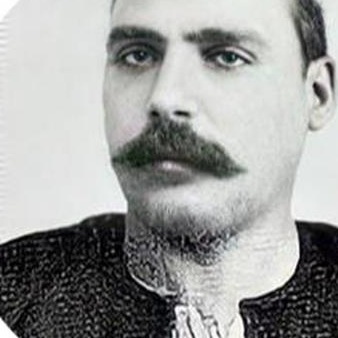
The munshid of Manial al-Rawda — a sheikh of the old Egyptian song, singing the dawrs of al-Hamuli and Muhammad Uthman, and in 1888 the singer taken to Istanbul to perform before Sultan Abdülhamid II.
Period photographRestored Recordings
Every track below is a remaster. Press play on the full sequence, or pick a single recording.
About the restoration
Every recording here is a historical track sourced from a public archive and remastered through a purpose-built chain — the same fixed chain for every file, no machine-learning enhancement. The aim is simple: sound better, and meet YouTube's audio standards. Rights status differs per recording and sources are credited where known; anything still in copyright is published with attribution and removed on request. The surface noise of the original transfer is still audible, because removing it completely would mean removing the recording too. How the restoration works →
Hear next door
These traditions sat beside each other on the shelf — recorded in the same cities, pressed by the same companies, and often sold to the same listeners. Follow the thread.